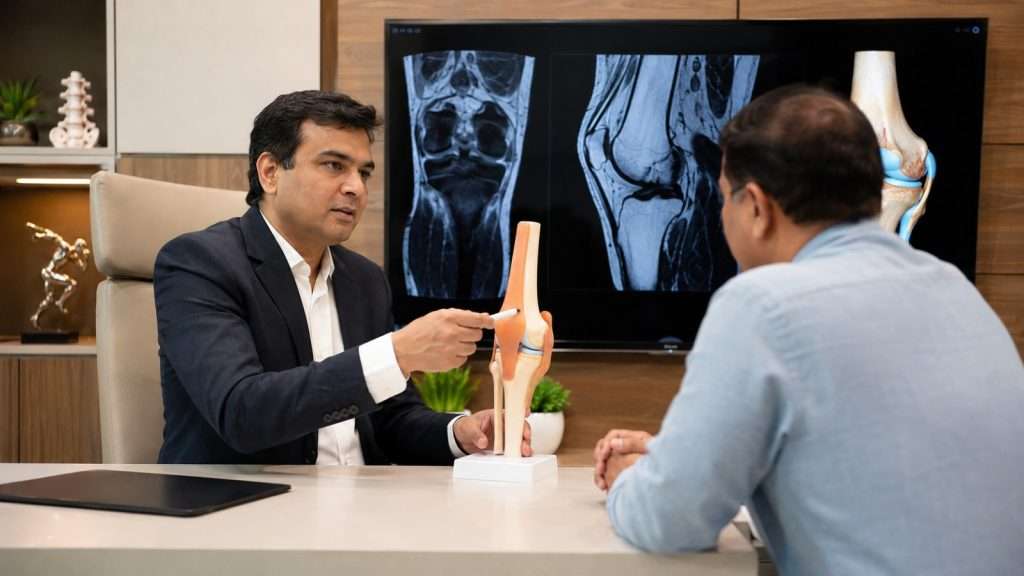
When Something Doesn’t Feel Right, You Want Answers—Not More Questions
The reason why most people consult a physician isn’t because everything is fine.
No one goes to see a doctor because everything is hunky dory.
It could be because of recurring fever.
You may be suffering from fatigue regardless of the fact that you are sleeping adequately.
Or, it could be because of persistent headaches, body aches, vertigo, or any other medical issue.
However, the biggest frustration during such times is not knowing what to do.
You try to find the causes behind the problems on the internet.
You seek advice from friends and relatives.
You wonder if it is something trivial or requires urgent treatment.
During such a time, no one wants complex medical language.
They want solutions.
They want clarity.
They want assurance that their medical condition is being understood thoroughly.
That’s exactly why most patients these days are curious about technology in healthcare.
If you are seeing a General Physician in Karve Road, then knowing about AI diagnosis will surely come in handy.
Why Are More Patients Talking About AI in Healthcare Today?
Just a few years ago, artificial intelligence appeared like something of the future.
However, today, it becomes an integral part of daily life.
Ranging from smartphone applications to navigational software, financial operations, and even online shopping, technology is aiding people in making decisions in a much quicker and smarter way.
The healthcare field is not an exception.
Increasing numbers of people realize how technology may assist doctors in gathering, analyzing, and sorting the data.
Nevertheless, there is one thing worth noting here – patients do not really care about artificial intelligence.
At least not directly.
Instead, patients are enthusiastic about what such technologies might bring them.
“Is AI Really Helping Doctors Understand Patients Better?”
While hearing AI-powered diagnosis, the immediate impression of many people is the replacement of doctors with robots.
Not quite how modern medicine functions.
AI was never created for this purpose.
On the contrary, AI was made to assist doctors in their practice.
Consider it as an assistant of very high caliber who can aid you in organizing and reviewing information, as well as assisting with clinical decision making.
However, there is one element that remains crucial in healthcare.
The doctor himself/herself.
Technology cannot replace practical experience.
Empathy cannot be replaced by any form of technology.
Nor can the bond that builds between a doctor and his patient.
This way, the best results in healthcare will come out through teamwork between advanced technologies and medical skills.
Why Does It Sometimes Take So Long to Find Out What’s Wrong?
One of the most stressful parts of any health concern is not knowing what’s causing it.
You know something feels wrong.
But you don’t know why.
You visit one clinic.
You take medications.
The symptoms improve slightly.
Then they return.
You undergo tests.
You wait for reports.
The uncertainty goes on.
For many people, this stage can even be more irritating than the illness itself.
Uncertainty causes fear.
New ways of processing information through the use of diagnostic tools and artificial intelligence are aiding health workers in making sure that nothing important gets missed.
Though no technology can solve all issues, it will at least assist doctors in making better judgments based on the information available to them.
When Every Symptom Feels Unrelated, Who Helps Put the Pieces Together?
Many health conditions don’t arrive with obvious warning signs.
Fatigue might seem like stress.
Frequent headaches might seem harmless.
Digestive discomfort might feel temporary.
But sometimes these symptoms are connected to a larger underlying issue.
This is where a General Physician in Karve Road plays a crucial role.
A physician doesn’t simply look at one symptom.
They look at the complete picture.
Your medical history.
Your lifestyle.
Your symptoms.
Your test reports.
Your overall health.
Sometimes what appears to be a simple complaint may actually reveal something that requires attention.
That’s why physicians often become the starting point for effective healthcare.
Common reasons patients consult a physician include:
- Fever and infections
- Diabetes management
- Blood pressure concerns
- Digestive issues
- Thyroid-related symptoms
- Chronic fatigue
- Preventive health check-ups
For many families, a physician isn’t just a doctor.
They’re the healthcare professional they trust whenever something doesn’t feel right.
Could a Small Symptom Be Telling You Something Bigger?
One of the biggest mistakes people make is assuming that mild symptoms are never serious.
Sometimes they aren’t.
But sometimes they are.
A little fatigue could be linked to anemia.
Frequent thirst could be related to diabetes.
Persistent headaches may indicate underlying health concerns.
Changes in digestion might signal something that requires medical attention.
The challenge is that many conditions develop gradually.
They don’t always announce themselves dramatically.
That’s why early evaluation matters.
The sooner potential issues are identified, the sooner appropriate treatment and lifestyle adjustments can begin.
Many serious health concerns become much easier to manage when they’re detected early.
Can Finding the Problem Earlier Change the Outcome?
In many cases, yes.
Patients often focus on treatment.
But diagnosis is where everything begins.
Because even the best treatment plan depends on identifying the actual problem.
When conditions are recognized early, patients often have access to:
- More treatment options
- Better disease management
- Reduced complications
- Improved quality of life
- Greater long-term health outcomes
This is one reason preventive healthcare is becoming increasingly important.
Regular check-ups aren’t just for people who feel sick.
They’re also for people who want to stay healthy.
What Actually Happens During Your Consultation?
Many patients delay doctor visits because they don’t know what to expect.
They worry about tests.
They worry about costs.
And sometimes they worry about hearing bad news.
In reality, most consultations begin with a simple conversation.
Your physician may ask about:
- Current symptoms
- Medical history
- Lifestyle habits
- Existing medications
- Family health history
If necessary, you will undergo a physical exam.
Tests can also be ordered based on your particular symptoms and health status.
We are not just trying to address your symptoms today.
The aim is to figure out what is causing them.
This is the foundation for all good medical care.
What Happens When You Need More Than One Expert?
It is not possible that each and every health condition could be taken care of by one specialist only.
Some times some other expertise would also be needed.
For instance, if you are suffering from any problem related to bones or joints or have suffered from any injury during playing then you may have to visit an Orthopedic Surgeon in Karve Road for diagnosis and proper medical assistance.
In case you face problems in vision or suffer from some eye disease like cataract or other related problem then you can visit the Best Eye Doctor in Karve Road for treatment.
At times there comes a need of surgical treatment. In such cases your physician would take you to an expert Best General Surgeon in Karve Road.
How Do You Know You’re in the Right Hands?
Every clinic can talk about technology.
Every hospital can talk about facilities.
But patients often remember something much more important.
How they were treated.
Did the doctor listen carefully?
Were questions answered clearly?
Did they feel rushed?
Or did they feel understood?
The best healthcare experiences combine:
- Medical expertise
- Modern technology
- Clear communication
- Compassionate care
- Patient-centered decision-making
Because healthcare isn’t just about treating conditions.
It’s about caring for people.
At the End of the Day, Do Patients Trust Technology or People?
The answer is simple.
People.
Patients trust doctors who listen.
Doctors who explain.
Doctors who care.
Technology can support healthcare.
It can organize information.
It can assist decision-making.
It can improve efficiency.
But it cannot replace human understanding.
The relationship between a patient and a physician remains one of the most important parts of healthcare.
And that’s unlikely to change anytime soon.
Good Healthcare Doesn’t Start With Technology. It Starts With Understanding.
When you’re worried about your health, you’re not looking for algorithms.
You’re looking for answers.
You need some assurance.
You need someone who will be able to explain everything to you and point out the path ahead.
Technology can certainly assist in this process.
But knowledge, empathy, and medical knowledge are still important aspects of good medicine.
When you are looking for a General Physician in Karve Road, make sure you find one who is experienced enough, well-equipped with technology, and is dedicated to their work.
The reason being that diagnosis does not involve only spotting the symptoms but knowing the person behind those symptoms as well.
Frequently Asked Questions
1. Explain what AI-assisted diagnosis means for healthcare.
AI-assisted diagnosis refers to using sophisticated technology to facilitate the analysis of data and make decisions about further actions to take in healthcare.
2. Is AI capable of replacing doctors?
No. AI is supposed to assist doctors rather than replace them as only doctors are responsible for patients’ medical evaluation and proper treatment.
3. Should I visit a general physician?
Visiting a physician allows for evaluating the whole body of a person as well as understanding why certain symptoms may appear and what should be done about them.
4. Is AI-assisted healthcare better?
AI assists people in diagnosing diseases by facilitating the process through gathering all necessary information and analyzing the data collected and presenting the results.
5. Name symptoms that need to be addressed immediately.
Unexplained fever, tiredness, pain, unexpected weight changes, breathing problems, and problems with digesting food must be addressed right away to receive treatment.
6. When should I consult with an orthopedic expert?
If you experience joint pains, symptoms related to arthritis, sports injuries, fractures, or mobility problems, an orthopedic evaluation might be advantageous.
7. How often should I undergo health evaluations as an adult?
This varies from one person to another depending on age and risk factors, but preventive health examinations are highly advisable.
8. Can doctors recognize signs of chronic diseases at their early stages?
Indeed, physicians usually recognize early indicators of ailments such as diabetes, high blood pressure, thyroid issues, among others.
9. Why is the early recognition of illnesses vital?
The early detection of diseases can enhance the efficacy of treatments while minimizing complications associated with the same.
10. What do I look for in a doctor or healthcare provider?
You ought to consider clinical skills, communication skills, patient-centered approach, healthcare support systems, and more importantly your health requirements.